

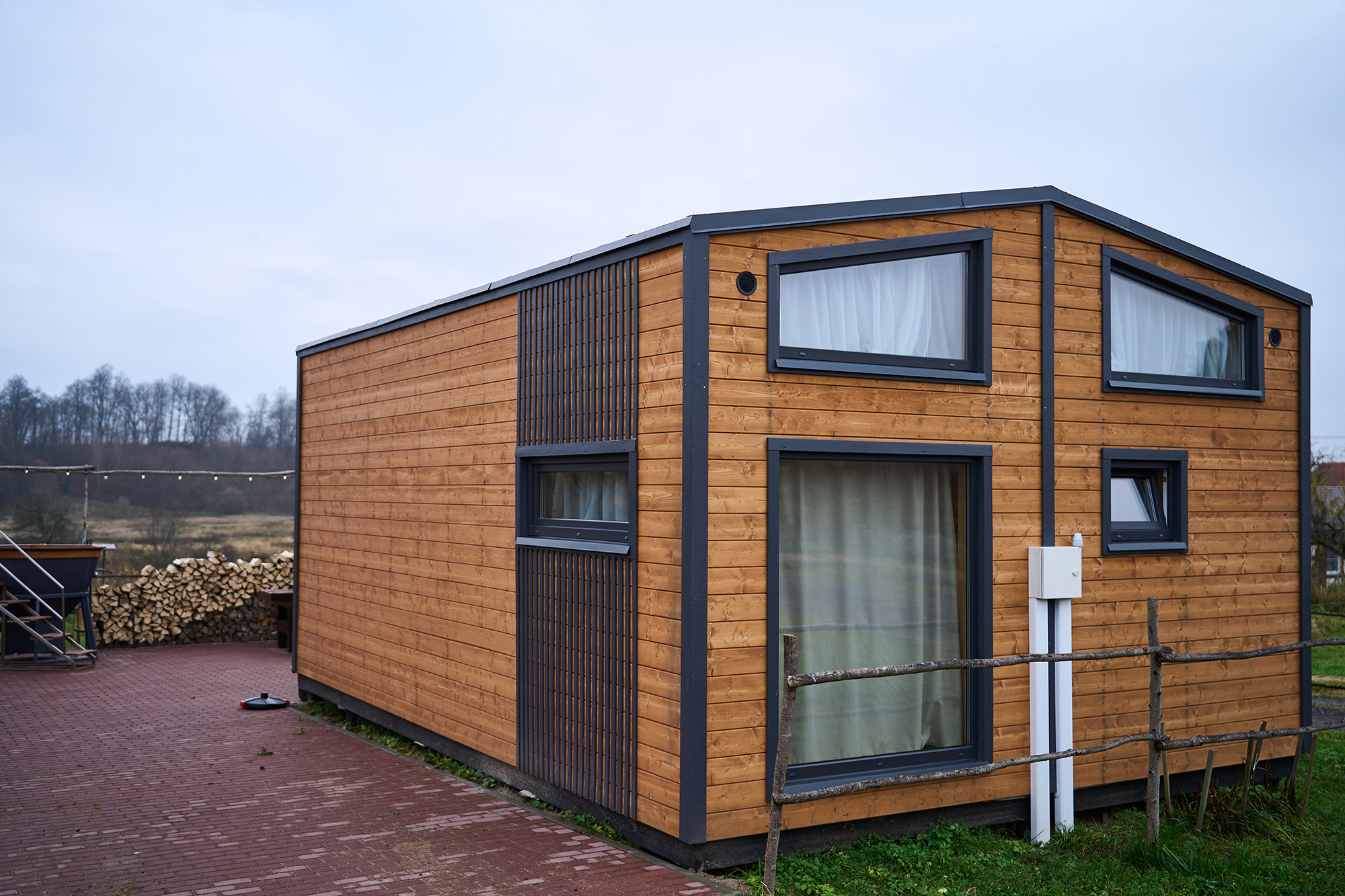
Plenty of advice tells manufactured homeowners that luxury vinyl plank is a good fit, and broadly it is. What almost nobody explains is why the installation itself needs a different approach, and the reason has nothing to do with the vinyl. It is about what the vinyl is going down on, how that structure moves, and what is happening underneath the home that you cannot see from inside it.
The subfloor is usually a different material
Site built homes generally sit on plywood subfloor. Manufactured homes very often use particleboard, and frequently at a thinner dimension than you would find in a stick built house. That distinction matters a great deal, because plywood that gets wet will swell and then substantially recover as it dries, whereas particleboard that gets wet swells and largely stays swollen. The bond between the particles breaks down and does not come back.
This changes the order of operations rather than ruling anything out. In a manufactured home, confirming the subfloor is sound and dry before flooring goes down is not a precaution, it is the main event. A soft patch near a toilet, a dishwasher or an exterior door is worth opening up and addressing first, because no flooring product sitting on top of compromised particleboard will perform the way it should.
The whole structure moves more than a house on a foundation
A manufactured home rests on piers rather than a continuous poured foundation, and those piers respond to the ground underneath them through the seasons. Western PA clay soils expand when wet and contract when they dry, so the support points shift slightly across the year in a way a basement wall simply does not. The floor system flexes with them.
This is exactly where floating installation earns its place. A floating floor is not bonded to the subfloor, so when the structure moves a little, the flooring is free to move with it rather than being held rigid against a substrate that is shifting. Glue down vinyl is an excellent product and performs superbly over stable concrete or sound plywood, but in a home where the supporting structure has seasonal movement built into it, a floating click lock installation tends to be the more forgiving choice.
Check the belly wrap before anything else
Underneath a manufactured home there is a vapour barrier stretched across the bottom of the floor system, usually called the belly wrap or bottom board. Its entire job is stopping ground moisture from rising into the floor structure. It gets torn surprisingly often, by animals, by plumbing work, by road debris during transport, and once it is open, damp air from the ground has a direct route into the floor assembly.
A torn belly wrap will undermine any flooring you put down, because the moisture arrives from below rather than above where you can see it. Anyone planning new flooring in a manufactured home should have a look under there first, or have someone do it for them. It is an unglamorous check that prevents the most expensive kind of mistake.
Look for tears, sagging or sections hanging loose, especially under bathrooms and the kitchen.
Make sure the skirting allows proper ventilation rather than sealing damp air in.
Note any area where the ground under the home stays wet after rain.
Height build up matters more in a manufactured home
Interior door clearances in manufactured homes tend to be tighter than in site built construction, and existing floors are often thin sheet vinyl laid directly over the subfloor. Adding plank flooring plus any underlayment raises the finished floor height, and there is less room to absorb that before doors start catching and appliances stop sliding out from under the counter.
This does not mean thin product is the only option. It means the total build up, plank thickness plus any attached or separate underlayment, should be part of the conversation from the start rather than discovered on installation day. Plenty of products work comfortably within manufactured home clearances once somebody has actually measured.
Weight across the floor system is worth a thought
Manufactured home floor systems are engineered for a specific load, and heavier surfacing materials add up across a whole home in a way they do not in a house with joists over a basement. Vinyl plank is light, which makes it an easy fit here, and that is a genuine practical advantage rather than a knock against anything else.
Tile and stone are wonderful materials that perform beautifully in the right setting, and they are regularly installed in manufactured homes with appropriate preparation and reinforcement. The point is simply that in this particular structure, vinyl asks less of the floor system, which is one more reason it has become the default for these homes rather than a compromise choice.
If you are flooring a manufactured or mobile home, the team at Kacey's Carpet & Flooring can help you work through the subfloor and installation questions that come with it. Explore our luxury vinyl plank options near Irwin, PA or contact us to talk through your home specifically. We proudly serve North Versailles, PA, Mckeesport, PA, Level Green, PA, and Penn Hills, PA, with North Versailles, PA ready to help you choose something built for how your home is actually put together.


